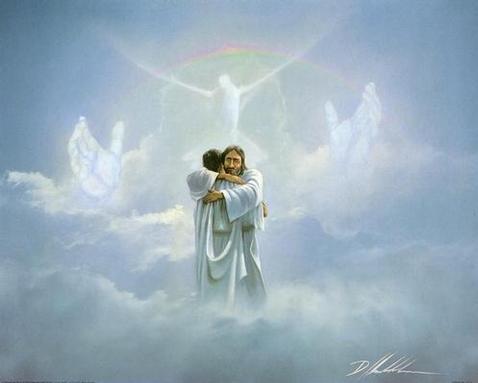
Please Consider this Powerful Ministry

sponsor a child inn ministries

Tuesday, May 12, 2009

Book News!

Book News for Fantasy Readers:

Eric Reinhold's new book: Shield of Faith, sequel to his amazing debut, Ryann Waters and the King's Sword, has just released! Eric has a passion for the Lord and a passion for a tale well-told, so if you're in the market for something new, check it out. If you're a parent or a teacher, I can tell you this is exactly the type of story you want for your kids: Male and Female Protagonists, Multicultural Heroes, Danger and Adventure without Gore and over-the-top violence, and a message that can't be beat. See the sidebar for Amazon links to both books! Go get'em! Check out the back cover below.


Like a few pictures in your books? Check out
a sample of the amazing artwork that you'll
find in Shield of Faith!

In other news: TitleTrakk.com has just kicked of their Hype-Machine for Christopher Hopper and my book: Berinfell Prophecies Book 1: Curse of the Spider King. Check out the article by clicking this link!


Also, we've opened the official Berinfell Prophecies Website. Big things to come there in the future. For now, it's just a landing page, but check it out and let us know what you think.

http://www.heedtheprophecies.com/

Also, we've moved the release date for Spider King to Oct. 4th! A month ahead of schedule. Woot!


Sunday, May 10, 2009

Little Bunny Foo Foo…Goes Cruisin'

Who is little Bunny Foo Foo? Aside from the old song some of you remember with great disgust, Foo Foo is my daughter Rachel's favorite little stuffed animal. Amazing since I think it came out of a Happy Meal. Nonetheless, Rachel loves to play with it, creating little adventures and homes and even feeding it. {Future novelist perhaps?}

Long story short, Rachel saw the commercial where "Daddy Businessman" went cross country on a trip and took his little girl's stuffed monkey {?} along. He sent back pictures of the little primate from all over the country.

So, Foo Foo went with my wife and I on a 7 Day/Night cruise of the Caribbean. I begin the narrative tonight and will add more photos and captions as the days go by. Enjoy the adventures of Foo Foo the Bunny...in the Caribbean.

This is Bunny Foo Foo in my laptop case. This was his mode of travel while on the airplane and in transit. Foo Foo claimed it was comfortable but did not allow enough space to read.


This is little Bunny Foo Foo at our hotel in Fort Lauderdale. As you can see, he staked out a primo spot on the bed. My wife and I were a little miffed about having to sleep on the floor.


Gaining a measure of revenge, my wife and I sneaked out to the pool while Foo Foo was sleeping. Makes you wonder who took this picture, doesn't it?


Mary Lu and I brought Little Bunny Foo Foo onto our cruise ship, The Norwegian Dawn. This almost proved disastrous as Foo Foo underestimated the trade winds in the Port of Miami and nearly flew off the railing of our balcony. My wife was all set to yell, "Foo Overboard!" but my catlike reflexes saved the day.


While my wife and I were out to dinner the night before our first island visit, Little Bunny Foo Foo discovered a talent for making strange animals out of bath towels. This, of course, is the dragon Smaug from The Hobbit.

Speaking of strange creatures, my friend Dave and I rented snorkel gear on the beautiful peninsula of Samana in the Dominican Republic. There we found all sorts of cool sea critters: clownfish, knifefish, anemones, sea urchins, and HUGE starfish. As you can see, this one was pretty large (big as my hand). Later we found one as big as a dinner plate, but Little Bunny Foo Foo was afraid to get near that one.


Little Bunny Foo Foo continues to impress the ladies with is remarkable skill of sculpting with white bath towels. This, of course, is the old TV show character Alf. Needless to say, this beautiful young lady succumbed to Foo Foo's charms. (My wife in the pic, btw). ;-)


Still stinging a little that Foo Foo went dancing with my wife, I decided to take the little guy for a snorkeling trip off the island of Saint Thomas. It was an amazing experience. We saw tropic fish, stingrays, starfish, and sea turtles. Oh, and I must not forget about the sea urchins. Little Bunny Foo Foo had a --little-- trouble with the snorkel fin and got to meet a sea urchin up close and personal.

From Saint Thomas, it was on to the British Virgin Island called Tortola. Stunning island. The two wives were a bit tired of the sun, so they stayed on board the ship (see upper right). We were told that one thing we just couldn't miss on Tortola was the Caribbean's oldest rum factory. 300 years old or some such and quite a sight to see. So Dave and I took Little Bunny Foo Foo, grabbed a cab and were off. We had no idea what we were in for.

Foo Foo Concludes...


So Dave and I (and Foo) were headed to the ancient rum factory on the other side of Tortola. We expected this gigantic, old monastery kind of place with huge wooden doors, vast chambers, and windows casting streams of light in the age old dust.
Uh, not so much.

What you see above is Foo resting on some kind of old wheel. In the distance behind Foo, you see a huge banana orchard. Not sure if bananas are for the rum, but it was cool nonetheless. Anyway, back to the factory.

Turns out, the rum factory was this itty bitty shack in the woods. Seriously, it was about as big as my basement. Inside was still kind of cool: old beams, large glass jars, and tons of barrels. Above you see Foo attempting to hide from a horsefly that was bigger than he is.


Above you see Foo Foo seated atop one of the many barrels. You see the date on the barrel? that means the rum inside has been aging since 2002. Some of the barrels were much older. As I'm sure you know, the Caribbean islands produce a ton of rum. (Official Disclaimer: Neither Mr. Batson nor Foo Foo advocate the drinking of alcohol. Very dangerous! Beware!)


After that adventure which included a harrowing ride through the twisting mountain roads of Tortola in a van driven by the craziest cabbie in the islands, we returned to the cruise ship. As you can see, Foo built up quite an appetite. So did I. Mmmm, can you say, "Monster Cheeseburger?"
Yum.


Next, Foo Foo settled down to read some cool epic fantasy by the poolside. In this case, Foo was reading Tad Williams' Memory, Sorrow, and Thorn Trilogy. Cool stuff if you're a patient reader.


Our next stop was a little island called Great Stirrup Cay. It's owned by the Norwegian Cruise Company. Actually, not so impressive. But Foo Foo really liked the palm trees.
Can you see Little Bunny Foo Foo in the tree?


Foo Foo and everyone else were exhausted from the excusions and ready to hit the hay.
G'nite, Foo Foo!

Monday, May 04, 2009

Looking for Something to Read?


Don't worry, the adventures of FOO FOO will continue. But recently, I've been getting a ton of requests for book recommendations. I guess I write to slowly, and readers buzz through my five books like a brush fire. What's the matter with you people? Don't you know it took years to write those? What? You don't care? You need more books? Well, I guess I can help. See, part of the coolness of being an author is meeting other authors and finding out all the cool books out there. So, for those dying for something new to read, check my sidebar. I've listed a ton of Amazon links to books I personally recommend.

What about you? You know the kind of stuff my readers like. What other books do you recommend? I'll try to put Amazon links for them as well.


Never alone!

Friday, April 03, 2009

Caribbean Cruise

Hi, all! My lovely wife and I (along with our very close friends, Dave and Heather) are on a Caribbean Cruise. So I won't be doing my usual blogging. But, stay tuned. Shortly after the cruise, we will have a special series: The Adventures of Little Bunny Foo Foo. ;-)

Tuesday, March 24, 2009

Interview with Author JA Konrath: Suspense, Pacing, and Giving Back

If you like Serial Killer Mysteries along the lines of James Patterson but with laughs and introspection in the vein of Robert Crais, JA Konrath could be a writer you'd enjoy. No mistake, these are not kids books. These are grab-you-by-the-throat, scary, white-knuckling chillers, oh yeah…with a side of hearty laughs.

I first met JA through the pages of Writer's Digest. He wrote an hour by hour account of how he became a published author. It was very inspiring and so funny I think I hurt something. At the time I read it, I was just a wanna be. Something about JA's selfdeprecating style just made feel like, wow, maybe it could happen to me. His M.O. is work hard and never give up, and you will get published.

So I visited JA's website: A Newbies Guide to Publishing, and found loads of information about the business of publishing--insider tips on everything from impressing editors to negotiating royalty rates. And JA just made the info available FREE. No sign up fee. No email address. Just here's the treasure, come and plunder.

By the way, JA has recently compiled most of his Publishing/Writing/Promoting into one resource that you can download, again FREE. Download the Newbies Guide to Publishing HERE.

JA, being the marketing genius that he is went on a special kind of booktour. He literally drove cross country and visited over 600 bookstores. He went in, met the staff, managers, etc. shook hands, gave stuff away, and thanked all the sellers for getting his books and helping the public get a hold of them. JA and I hooked up on the Maryland leg and visited a gazillion stores. As you can see from the picture above, this was JA and me AFTER the day's touring. We were exhausted. But it was great fun getting to know him.

JA continues to work as hard as ever, and his books continue to do well. He's generously agreed to show up here for an interview. Enjoy a visit from JA:


WTB: How important is suspense in terms of selling books? How do you build suspense?

JA: Suspense is what keeps a reader reading. It's all about revealing and withholding information.

The goal as a writer is to present unresolved situations; in other words, to make a big mess. The point of the narrative is to resolve the situation and clean up the mess.

In the case of thrillers, the suspense often comes from characters in trouble, and villains getting their just desserts.

To create suspense, write a situation where the reader is forced to ask questions, the main one being, "What happens next?" This is done through conflict, and the promise of conflict.

Happiness, while wonderful in real life, is boring in fiction. Compelling fiction heaps problems onto characters. If these problems are meted out at a pace that makes the reader want to read faster, you've achieved suspense.

In short, suspense is the action that happens in between the question and the answer.


WTB: One of the things I love about your Jack Daniels Mysteries is the pulse-pounding pacing. Your books just never drag. Do you create pacing as a conscious choice? If so, how can aspiring writers improve their pacing?

JA: I appreciate the compliment. Whether we like it or not, we live in a fast food, MTV, web-surfing world, and people's attention spans have gotten shorter. As writers, we need to hold their attention, and pace is a smart way to do that. James Patterson has the right idea, writing books that are 300 pages long that have 120 chapters.

To create a fast pace, first focus on action scenes--these are the scenes where things are happening. The scenes with the conflict.

Next, make sure things get worse for your protagonist before they get better. Escalation is essential.

Short chapters, short paragraphs, show don't tell. Dialog is better than internal monologue. A fast paced book has a lot of white space on the page.

Finally, make sure you cut scenes that aren't needed. Backstory and lengthy description tend to weigh stories down.


WTB: Having read your articles in Writer's Digest as well as on your blog: Newbies Guide, I think it's awfully generous of you to give so much information away, esp. on getting published. Why do you do it?

JA: Because the chicks dig it.

Seriously? Because no one helped me. I spent a lot of years, struggling and depressed, trying to figure out this business. It was like scaling a wall with no end in sight. I vowed that if I ever made it, I'd help other writers so they wouldn't have to go through that.

The Internet is a perfect vehicle for sharing information. For the first time in the history of fiction writing, writers can instantly access one another. What a wonderful group resource we have, and I'm happy to contribute to the knowledge pool. I've made a lot of mistakes. I've tried a lot of different things. I've learned quite a bit. What good is all of that if I don't share it with others?

For example, I'm currently on a blog tour, visiting as many blogs as I can during the month of March, in anticipation of my horror novel, AFRAID (written under my pen name, Jack Kilborn) coming out March 31. I had no idea if this tour would be a worthwhile endeavor.

But my Google hits have gone up about twenty percent. My Amazon.com numbers have spiked higher. I'm getting more email than usual, and higher traffic on my website and blog. Best of all, this blog tour didn't cost me a thing. I'll post more detailed results on my blog in April, but I think this tour was a smart thing to do.

Contrast that to mailing 7000 letters to libraries, which I did a few years ago. That took a very long time, cost a lot of money, but overall wasn't a worthwhile investment.

Live and learn. But the only good knowledge is knowledge that is passed on. Or else everyone has to reinvent the wheel.

Then there's the trickle down effect. If you help others, they may link to you, increasing your brand awareness and name-recognition. Some may become fans. Some fans may become book buyers.

There's really no downside to generosity. Which is why I encourage everyone reading this to be generous and buy all of my books. Except AFRAID. That one is probably too scary...

Joe

I'll second what JA said about "AFRAID." Again, since I know so many kids check out this site, remember these are adult books. I'm talking Silence of the Lambs kind of scary. You've been warned.

Wednesday, March 18, 2009

Coming Soon!

Over the next couple of months, I am honored to welcome not one but two very cool guests. Of course, I won't tell you exactly who, but I will say, one of them will rock your world. The other might scare you half to death. Oh, and there are two more clues below.


Sunday, March 15, 2009

What is this a picture of?

If you think this is just a picture of author Christopher Hopper and I via iChat, you're only half right. Search around my blog home page and see if you can figure out what this picture is really about?

On another note: The visitor counter in my sidebar is growing closer to the 100K mark. I wonder who will be the 100,000th visitor to Enter the Door Within? Stay tuned.

Wednesday, March 11, 2009

Description: Immerse, Don't Drown

If you're a little late to the party, allow me to explain what you're seeing in the image above. This is a piece, the 3rd so far, of the cover design for my next book: Curse of the Spider King. The first book of an epic fantasy series coauthored with Christopher Hopper, Spider King takes the traditional "portal fantasy" and turns it on its head. Rather than just sending a few kids into a fantasy world, we ask, "What would happen if the fantasy world came to us?"

A lot of writers, editors, and publishers will tell you that, if you don't "feel it" when you're writing a story, you're readers won't "feel it" when they read the story. I can honestly say, Christopher and I were "feeling it" as we wrote Spider King. It is the MOST fun I've ever had writing, and possibly the most "creeped out" I've ever been writing. There's one scene that Christopher penned that is every child's worst nightmare come true. It reminds me of a recurring dream I used to have, one that completely freaked me out.

Also, just a reminder that we have a contest going on. Design a HEADER for this blog and win a signed copy of any book I've written, including Spider King! See the earlier posts for details.

and now for something completely different...The Larch, er…just kidding.

The Art of Description

I. When to Describe:

The first thing to consider about description is that it generally slows down the pace of the story. So, if you're working on an action scene, you may not want to hit the brakes with a bucket of description. Imagine a car chase: frantic, treacherous action…but then, the author takes half a page to describe the nearby skyscraper. Good idea? Uhm…not so much.

Here are some times when you probably want to describe:
A. When we first meet a character: readers need to see who they are dealing with.
B. When you bring the reader to a new setting: see the picture above. This is the scene in Fellowship of the Rings when Aragorn brings the team to Lothlorien. It is the reader's first glimpse of the place. Tolkien spent pages describing it. Good idea? Absolutely.
C. When you are foreshadowing: dropping clues early on in the story can lead to supercharged scenes later. Sometimes, a clue is a little too obscure. Give it a little extra description, so it will stand out just a bit. The reader will wonder, and that's a good thing.

II. What to Describe:


Let's say you've identified a place you want to describe. Your hero has just wandered into the forest above. Now what? What do you actually want to describe? Rule #1: Do not attempt to describe everything. This goes for characters and settings alike. I can't tell you how many young writers introduce a character by giving a page of head to foot description. YIPE. If there's anything that screams: NOVICE, that's got to be it. Describe just a few things, but particularly something your reader can use to tag the character or place. Harry Potter had a lightning bolt scar on his forehead. Gandalf had bristling white eyebrows that stuck out past the brim of his hat. Robert Crais character Pike always where's aviator sunglasses. Those are quirky descriptive tags that allow a reader to file the character away. Every time the character appears thereafter, the reader says, "Oh, that's the kid with the scar."

Look back at the picture above. Sorry, I couldn't find a larger version of it. It's a cool picture of a creepy forest. So what do you describe? Give it the glance test. Glance at it. Look away. What do you remember?

I remember that it was misty. The trees were very dark. And, they seemed to be leaning in. It feels kind of suffocating, doesn't it? Cool! Describe that element. Don't mention that a little white moth flew by. Who cares?! Again, give the reader some meat for his/her imagination. The rule is: Immerse, don't drown. You want the reader to go there, but not to get sick of being there.

III. How to Describe:

Everyone knows you describe with adjectives and adverbs, right? Sure. But what about verbs? You might ask, uh, but those are those action words, right? They don't describe anything. In fact, that's why we have adverbs...to describe verbs. Right?

Wrong. Verbs are action words, but put another way, verbs are words that SHOW action. Sound familiar? How many times have you heard: "Show don't tell"??? It's too true. And verbs are the perfect thing to show the readers what's going on. The key is to use specific verbs. Why say "He ran quickly." When you can say, "He sprinted" --OR-- "He charged."??? Find the right verbs for the scene. Be precise with your verbs and watch your story come to life.

A word about mood: When getting ready to describe something, consider the scene's mood. What do you want the reader to feel. If it's sad, don't describe the cheery elements in the scene. And don't use cheery words to describe things. Pick the bleakest elements of the scene and describe them in bleak terms.

Christopher Hopper does a cool drill with students. He has them look out of a window and describe what they see. First, a happy scene. Then a sad scene. The results are amazing. For the happy scene, kids described the warm sunlight, the light breeze, the bright green leaves, the bunny shading beneath a full pine. For the sad scene, the kids described the veil of clouds that obscured the sun, the breeze that did nothing to soften the brutal heat, the dead leaves, sagging branches, wilting plants, etc. Try it yourself and enjoy the difference.

Friday, March 06, 2009

The Plot Thickens, The Contest Continues...

Well, well, it seems many of you solved the mystery of the previous post. {Ahem, how many of you peeked?} The picture clips you see are indeed pieces of the cover of my new book "Curse of the Spider King," the first of a new fantasy series coAuthored with my good friend Christopher Hopper. The cover is so unspeakably cool that I can't post it all at once. ;-) So, you'll need to settle for a slowwwwwww, drawn out process.


Meanwhile the Header Contest Continues. This blog needs a new Header. Using my books' cover art, desktop art from the sidebar, your own original art, Photoshop, and /or any other cool graphic/titling software, create a header according to the following specs:

1. Header must include text: Enter the Door Within.
2. Header must be the following dimensions: 660 x 105 pixels.
3. Header must be created in jpeg format.
4. Header must be emailed to me by May 1st. (see sidebar for email addy)

The Winning Artist will receive a signed copy of any of my books!


The Plot Thickens


We've talked a lot about how to create the opening of a novel that will HOOK your reader. Click here, if you missed that series of posts. But now that you've hooked a reader, editor, or publisher, how do you keep them reading?

Here are some tried and true techniques to thicken your plot:

1. Develop Your Characters: Readers like to get to know characters, love them, hate them, fear for them, etc. But no matter what, your readers must want to follow these characters through the novel.

• So, get out a scrap sheet of paper, or open a new Scrivener file. (See sidebar for the most fantastic and affordable writing software on the market). Answer these questions: What does she/he look like? Why does he/she dress like that? What are his/her goals? What are his/her motives? Does he/she have any physical quirks--ie things that stand out: a scar, a tattoo, crook in the nose, thin lips, walk with a limp, slurs his "S" sounds, etc?

2. Complicate the Path: Now that you know who your main characters are, ie: you know your good guy's goals and your bad guy goals, it's time to start throwing things in their path that complicate the matter. What can you throw in their way that will keep them from reaching their goals? Good guy is trying to get a job? Make him late for the interview. A watermelon truck turns over on the Interstate. Oops, good luck main character. Good Swordmaiden needs to prove she is queen? Let someone else show up claiming to be queen with evidence to prove it. Keep in mind, these events are not called Rising Actions for nothing. You must up the ante.

3. Multiply the Plotlines: This won't work for all stories, but some authors have driven us crazy with technique. You have multiple main characters. Instead of following one main character through his/her linear (straight forward) path, leave one plotline, preferably with a cliffhanger, and switch to another character. JRR Tolkien, Stephen King, Tad Williams, Tom Clancy...are just a few of the authors who do this to spectacular effect. What happens? You're dying to find out what will befall main character one, but you know you have to read through character two to find out. YAAAAHHHHH!!! {SCREAMS pulls out hair}. The readers will race through your pages. Imagine what happens when you leave character 2 on a cliffhanger as well? Heh, heh, heh! {Cue fiendish laugh}

Beware: this technique can be overdone. If you leave one character's plotline TOO long, you risk losing the reader. Patience can only be stretched so far.

Beware 2: Careful when you switch POV (narrator's point of view). If you're telling the first character's story in first person (I did this. I said...etc), then you should probably tell the other characters' stories in first person from their points of view. I prefer to use 3rd person omniscient, as I can go anywhere and into any character's minds.

4. Offer Intriguing Clues, but Don't Give Away the Farm: If you wrote a good hook in the story's exposition (introductory scenes), you have probably tempted your reader with a mystery of some kind: Who's sending those threatening letters? Why was the sun an eerie greenish color? Who is the killer? The reader wants to know the answers. So, give them a few clues, some text details that lead the reader closer to the answer, without giving the answer away. Devious and evil, I know. But readers love it.

I hope that helps you thicken your plot. Post a comment and let us know how you're using the techniques!


Wednesday, March 04, 2009

A Mystery and a Contest

First, the Mystery: Take a look at the image above.
What is it? Any guesses?
Post a comment, saying what you think it is.
Then, if you cannot stand to wait, use your mouse
and highlight the blank space below to find out.

This is a piece of the cover design for Curse of the Spider King,
Book One of the Berinfell Prophecies Series by me and
Christopher Hopper.


I will post more pieces in the coming days. See how many pieces it takes you to guess correctly. That is, if you haven't already peeked. ;-)

A
nd now for the contest. I'm getting tired of looking at the plain header
for my blog. I know some of you have got to be amazingly good with
Photoshop, Illustrator, etc. So, design a header for this blog. The
best Header will win a signed copy of any of my books.

Here are the requirements:

1. Must say: "Enter the Door Within"
2. max width is 660 pixels wide. (I can't figure out the height)
3. Image must be in jpeg format and emailed to me (see sidebar for email)
4. All entries must be submitted by May 1st.
That's it! Now get designing, you creative people you!

Saturday, February 28, 2009

DEADLINES


DEADLINES: Even the word sounds ominous. The finality of the concept is frightening: something is due. There are no excuses. No exceptions. No extensions. Finish on time or pay dearly.

We've all had deadlines. But for the author or aspiring author, deadlines become an everpresent reminder of what is left to do. If handled poorly, deadlines can lead to all kinds of pressure and stress. Deadlines are a part of the business, but ours is a creative field. We create when the muse strikes. How do you rush creativity? Doesn't rushing a creative endeavor mess it up? Hmmm, seemingly valid points. So what's a writer to do?

"I love deadlines.
I love
the whooshing sound
they make as they fly by.
"
Douglas Adams

Love that quote. It captures the kind of manic frustration involved with working under a deadline. It almost feels helpless in a way...as if there's nothing we can do about deadlines whooshing right on past. I disagree.

I believe authors can to a lot to make deadlines manageable. As a matter of fact, I believe deadlines can provide much needed energy and motivation. Oh, and I believe yes, you can rush creativity. I'd even go so far as to say that there are times when the crunch we're in forces out creative ideas that would not have appeared otherwise. So here are my suggestions for getting the most out of deadlines.

Deadline Tip #1: Set reasonable deadlines.
If this is in your control, don't bite off more than you can chew. If you don't know how much your can reasonably write in a day, find out. Then consider the length of the thing you are writing, and do the math. If you write X amount of words every day, then, you can write a book in Y amount of time. When Thomas Nelson offered me a contract for The Door Within Trilogy, I jumped at it. I read the deadlines and went, "Duuuuhhhh, sure, I can do those." Not smart. I'm a full time teacher, and oh, by the way, I have a lovely wife and great kids I like to see once in a while. Now, I'm much more realistic. Keep in mind, publishers have schedules to keep if profits are to be made. Most publishers are going to ask you for a book in 3-6 months. If it's three, I have to say No, I can't do that.

If the deadlines are not in your control, then you will need other strategies.

Deadline Tip #2: Set your own deadlines
So you've got six months to crank out your 80,000 word novel. Divide the words by the number of days, and see what you've got. What you're looking at is about 500 words a day. That is entirely doable.

Deadline Tip #3: Frontload as much as possible
The worst thing you can ever do is look at that deadline six months from now and think, wow, I've got six months. If you did Tip #2, you know that every day you skip is 500 words on your shoulders. So go after it hard early. Knock out 1,000 words one day, 2,000 the next. Challenge yourself.

Two of my favorite techniques are: Race a Friend and Race the Clock

I'm coauthoring a fantasy series with Christopher Hopper. We are both Kings of Procrastination and Distraction. Seriously...it's scary. I wonder whose Twittering? Hmmm...did the Redskins get that free agent they were after? I wonder if Biff ever emailed me back? YIPE. Next thing you know, 2 hours are gone and I'm still staring at an evil, blinking cursor. So what Christopher and I do is we challenge each other to a "Sprint Race." We give a time limit, say 1 hour. We say GO. And off we write. It's amazing how much we can write in those sprints. Usually, I can pound out 500 words in an hour by myself. When I sprint against Christopher, I've never been less than 700 and many times top 1000 words. Yes, it's rough stuff. But, duh, it's a rough draft. lol

Race the Clock is just you and the minutes. You say, "It's Monday. I need 500 words in one hour. GO!!" Then you just pound until the time is up. Raise the number on Tuesday. Keep going.

Deadline Tip #4: Be satisfied with little deadlines met.
If you wrote the 500 words you needed for the day, be happy with it. If you want to do extra and the ideas are coming, go for it. But if not, get up, and be content. You did your job for the day.

Deadline Tip #5: Nibble away at the numbers.
I got this one from Author Sharon Hinck. Let's say you've got to finish 1000 words in a day. Sitting down to knock that out in one stretch isn't always easy. So nibble away at it. If you get up early and pound out 250 words, then later on, all you've got left is 750.

Deadline Tip #6: Outline.
I know there are some "Seat of the Pants Writers" out there who would want to string me up for such blasphemy (ahem, Bryan Davis), but I have found that outlining helps me meet my deadlines. I often take a month to outline a book. That's a long time, but it literally saves me three months of writing and REWRITING time. If you know where you're going in the next scene, then you can write on.

Deadline Tip #7: Stop in the middle of a cool part.
Speaking of author Bryan Davis, he's responsible for this gem. Never finish a writing session at the end of a scene. Always stop in the middle of a cool scene so that the next time you write, you can just leap back into the momentum.

Deadline Tip #8: Eliminate distractions.
That's right: get rid of them. If the internet distracts you, disconnect your writing computer. If it's a video game or a show, make it wait. Use it as a carrot dangling at the end for when you finish. But don't get out of that chair until you are finished what you need to do.

So, there they are, 8 ways to let Deadlines rest in peace.

What about you? Do deadlines daunt you? Do you have any other ideas for how to defeat deadlines?


Tuesday, February 17, 2009

Fiction, Character Development, etc.

Every once in a while I get an interview request from a student. As I do, I like to post them here in case any of my readers have similar questions. Here's one about the merits (and dangers) of fiction, as well as, a bit about character development.

About ten percent of people would argue that fiction is a waste of time. What would you say to them?

I'd say for those few sad people, perhaps, it is a waste of time. Maybe they are a bit close-minded. ;-) However, I might suggest that they have not yet found the right book. I didn't like fiction until 6th grade. I could read very well (both my parents were teachers), but I never read for fun...until my cool cousin gave me a copy of The Hobbit. That changed everything. I found a deep connection between Bilbo and myself. I found a longing to visit other lands and to dare to try some important deed. That's when fiction became a friend. I've read The Hobbit and The Lord of the Rings 14 times since then, and I get something new from them each time.


What impact would you say that fictional books, movies and other story-telling mediums have on people?

The impact of all types of media on people is much more profound than some might believe. And like other benign entities, reading fiction can have a positive or negative influence. If a book is morally sound, readers, especially young readers, can absorb lessons about life. "Ah, that character lied and it blew up in his face, so therefore I won't make that mistake." Reading fiction can also arouse our curiosity and prompt us to dare to do great things in life. Ask any leader if there was a book that had a profound impact on them. Chances are there was. But the impact can also be very negative, esp. if the book is not morally sound. Once again, we absorb what we read and add the content to our prior knowledge banks. If the character is rude to his parents, breaks rules, and gets celebrated for it, the reader thinks, "Ah, I can achieve a kind of glory by doing those same kinds of things." There is also a fault in comparing the fictional world to the real world. A wife who constantly reads romance fiction might begin to think of her husband as quite the pudgy clod compared to the handsome beaus that populate the fiction she reads. And that's bad news.

Would you say that you can tell a lot about an author through what he writes?

No question. Any writer worth his salt will put a bit of himself into the story--many times it's unconscious. But it's still there. It can be catharctic, therapeutic, and fun to fuel a tale with a bit of you. But it can also be narcissistic. You don't want every character to be you wearing a wig. And certainly there are more activities in the world than your experiences, so you've got to branch out. When I read Tolkien, I'm quite sure that I'm getting "him" in the package. I believe he's a bit of Frodo and Gandalf rolled into one. I can tell Tolkien was fond of deep friendships, things that are green, and good food. I am too incidentally.


Some people say that detailed vivid descriptions are the way to go, but at the same time others say that you should leave things up to the reader’s imagination. That seems like a paradox to me. What’s your opinion?

I'd say that writers NEED vivid description in order to activate the reader's imagination. The sticking point is exactly how much vivid description does a writer need? And of course there's no exact answer or formula. I believe in immersing the reader without drowning him. If you've got a mountain range to describe, what really needs to be mentioned? The reader has seen mountains before, so what makes these mountain's different? Do the peaks stab up into the clouds like fangs? Are they cloaked in shrouds of mist? Are they blanketed in endless patches of purple and yellow flowers--those things might matter, depending on the mood you wish to convey. When describing a person, don't give us the police line-up description. Do we really need to know that the sweater is 30% polyester? Include the quirky details instead: he had thick eyebrows, a moustache, and goatee, and if he frowned in just the right way, he looked like Abraham Lincoln.


How do you make a main character likeable? …my novel is written in 1st person so I’d say this is an important issue.

I'd say begin with a bit of self inventory. Why do you like the people you like? Make a list of different people and why you like them. Readers like characters for many of the same reasons. And when you go to create characters, you help readers get to know these beings the same way you get to know real people: actions, words, looks, attitudes, thoughts. Show, don't tell. Bonnie was miserable. (NO). Bonnie wrung the corner of her notebook. It was all she had to strangle at the moment. The tears came fast and furious. Her throat thickened to the point that swallowing was pain. etc. etc.


Monday, February 09, 2009

A Need to Know Basis...

My church did a really great message about staying immersed in God's word. It really encouraged me to read through the Bible in a year. I'm using the SOAP method and really enjoying the discoveries so far. If you're not familiar with SOAP, you might consider taking a bath. Pffft! Just kidding. Here's how S.O.A.P. works:

S--Scripture: write down any key verses or passages that stand out to you as you read.

O--Observations: what are your initial thoughts about what you've read? Any connections or meaning that you've gleaned.

A--Application: how does what you've learned actually impact daily thinking, doing, and living?

P--Prayer: Praising God for the elements of truth that have struck you and asking Him to make changes in your being and life because of this new truth.

Basically, you just write all this stuff down in a journal. I use a word document that I just keep saved in a folder.

Using this technique, I'm into Exodus now, and I have 16+ pages of devotion and reflection. When I finish the Bible, I'll literally have a whole book. How cool will that be?

Long preface to say that the study I did today really seemed shareable. Not everything is, nor would I bore you with my meandering thoughts that often. I'm no theologian with a half dozen initials after my name. I'm just a seeker, gathering what wisdom I can. For what it's worth, here's what I found the other day...

Scripture: From Exodus 24:

15 When Moses went up on the mountain, the cloud covered it, 16 and the glory of the LORD settled on Mount Sinai. For six days the cloud covered the mountain, and on the seventh day the LORD called to Moses from within the cloud. 17 To the Israelites the glory of the LORD looked like a consuming fire on top of the mountain. 18 Then Moses entered the cloud as he went on up the mountain. And he stayed on the mountain forty days and forty nights.

Observations:
So Moses was up there 40 days and nights...with God. What did they do? What did they talk about? That's a lot of time by man's standard. BUT, we aren't told what they did during that time. The Bible...God...doesn't share those details with us. I love that there are things we simply don't need to know. Or maybe, there are some things we really must seek after to find out.

Applications:
God knows what we can handle. Going back to the Garden; God said, there’s one tree here you don’t want any part of. It’s the Tree of the Knowledge of Good and Evil—don’t eat from that tree, or you’ll die. Adam and Eve did it anyway. They didn’t die right away. Yes, they were made mortal…and so death would now haunt their steps into the future. But what happened immediately? They knew they were naked and they knew shame for the first time. It gave them fear (they were afraid of the consequences of their actions); it gave them guile (they hid from God); it gave them irresponsibility (they blamed each other and the serpent). It was too much for them, but they dove in anyway. We humans want to know it all: we want to know why God did this or didn’t do that? We want to know why bad things happen to good people. We want to know what God is like, personally. We want to know how He did stuff. The reality is, God knows what we can handle, and it just might be that there are certain things that we don’t need to know…for our own good.

Prayer:
Lord, thank you for looking out for me, for shielding me from knowledge that would puff me up with pride or destroy me in its complexity. Help me to be content with the knowledge your Spirit reveals to me in your word and in life. When there are mysteries, help me to resist the urge to demand to know. And in the short time that we have to wait before heaven, let me be content to know you are good and let me trust you with all of life’s greatest mysteries. In Jesus’s name amen.

Friday, February 06, 2009

Writer's Bootcamp 3

Greetings from Scranton, PA!!

Christopher arrived safely at our favorite Scranton hotel, The Radisson, Lackawanna Station. This is our 3rd year getting away together to write. This year's a little different in that we are coauthoring a new book series: The Berinfell Prophecies.


Tomorrow from noon to two, Christopher and I have an event at The Banshee. This fabulous gathering place has become to us what the "Bird and Baby" was to CS Lewis and JRR Tolkien. We soak in the atmosphere and talk story.

A lot of people have asked us how do we coauthor a book? Aren't there conflicts? What about your writer's voice? Don't they clash? Won't people notice which parts you write and which parts Christopher writes?

Ultimately, I guess our amazing readers will have to decide how we do. So far, I can honestly say that I am having the most fun writing that I have ever had. We seldom if ever have conflict, and we've given each other cart blanche to edit each other's work without WITHOUT using the track changes feature. We're hoping in that way to develop "our" voice rather than me then him, etc.

Something else that we're trying is a process we call Layering.

This is nothing new to writing as it really is just several draft stages rolled into a more methodical approach. Here's what it looks like:

Layer 1: Go after the story--action, plot, go, go, go! We take our outline and just let the story roll on out there. We don't stop for flowery language; we don't think too hard about theme; and we let our characters grow and act and do without too much interference from the bumbling authors.

Layer 2: Character Focus--who are these people? Why are they doing what they are? Why should anyone care about them. The second time through the manuscript, we delve into the personalities and attributes of our main characters. They may be fine just the way they are. Or, they may be cardboard, 2D wannabees in need of major reality check!

Layer 3: Description--the reader needs to be immersed, not drowned, in the world we're creating. They need enough description for their imaginations to get their footing and do their thing. We go through line by line, cutting, tweaking, adding. We consider the mood of each scene and include descriptive details to reflect the emotion we are building. You don't need every detail about the forest, but that one vine that dangles from the tree like a noose...might be important.

Layer 4: Cool Stuff--I know, I need a better name for this one. But really this is the layer where we get crazy. We start weaving in a little foreshadowing. We throw in those righteous bits of dialogue that give the reader a clue to chew on. We start naming the cool swords and ancient caves and such. These are things that can really bog a writer down if you try too hard to get it right on the first draft. Seriously, I can waste a whole day just thinking of a character name--and the vitality and momentum of the scene I was working on just gets crushed. Best for last.

We'll see how it works out. So far. So good. March 13th is our deadline, and that's when Layers 5 thru 12 will occur...when our editors read our stuff and say, uh, you're serious, right?

Something Else to Consider: Catching the Gold Coins

At any time during this layering process, you may have brilliantly cool things pop into your head: a tidbit about the language the Elves will speak, a sweet bit of dialogue, a poignant bit of description for a character you've not even invented yet--whatever it is, you CANNOT afford to ignore them. These are "Gold Coins from Heaven," baby. You need to scoop them up, or like manna, it will be gone.

Yes, this interrupts the layering process. I use Scrivener or SuperNoteCards when I write, so I just pop open a new file, throw in the Gold Coin, label it as specifically as I can, and then dive back into the manuscript.

Tuesday, February 03, 2009

Reminder about a Way COOL event in PA.


H
ey, all! 12-2pm Saturday, February 7th, Christopher Hopper and I will appear at Scranton’s own Banshee Pub for an ALL AGES Dramatic Reading, Swordfighting, Booksigning, and Discussion. So if you know anyone in the great state of Pennsylvania who might be into Fantasy books, please spread the word and tell 'em to come out and meet us!


In days of yore, traveling Bards entertained audiences with tales of faraway lands and feats of derring do. Return to yesteryear as two award-winning authors and entertainers come to lunch with patrons of the Banshee Pub at 320 Penn Avenue. Fresh off a 10-city Tour of the West Coast, authors Wayne Thomas Batson and Christopher Hopper will appear in full medieval costume to entertain Banshee customers of all ages with dramatic readings from their books, swordplay, and perhaps a song or two.


For Fans of Narnia, Lord of the Rings, Eragon, and Inkheart
With five young adult Bestsellers and eight published novels between them, Batson and Hopper know how to spin a tale. Families are welcome. Young and old come and trek with Batson and Hopper down a spiral stair to a subterranean labyrinth where a gigantic beast dwells. Or visit the kingdom of Dionia where great heroes train and something treacherous lurks in the shadows. Batson (Thomas Nelson Publishing) will be signing copies of his Door Within Trilogy, Isle of Swords, and Isle of Fire, and Christopher Hopper (Tsaba House Publishing) will sign copies of his Rise of the Dibor and The Lion Vrie—with perhaps a sneak preview of his soon to be released Athera’s Dawn.


For more details, email me (see sidebar) or contact The Banshee Directly:

Banshee Pub
320 Penn Ave
Scranton, PA 18503
(570) 969-4248

Sunday, January 25, 2009

A Promise You Can Count On

We've all seen the crazy-looking guy wearing the rainbow-Afro and holding up a sign with John 3:16 emblazoned on a sign in bright marker or paint. Most of us know the verse by heart. It's one of those verses we hear in church and around "church people" all the time. It's right up there with "In the city of David, a child will be born..."

The problem with some of those verses that become too familiar is that we tend to water down the verses meaning or drain it of its punch, its very significance. In church today, we weren't even studying the verse at all, but the sermon hit me between the eyes with the fact that God's word is true and that we need to take God at His word. And BAM, there was John 3:16, staring me right in the face. So here are some thoughts on one of the most uncommon "common" verses in the New Testament.

"For GOD so loved the world that he gave his one and only Son, that whoever believes in him shall not perish but have eternal life."

John 3:16 begins with God. He is the catalyst for all that is to come, the source, the producer, the doer of it all. God is all powerful, all knowing, and everlasting. The Bible makes it clear that with God, nothing is impossible. NOTHING. He made the world. He made the stars and the sky. He made you and He made me. Since He made us, He is intimately familiar with every cell in your body. He knew the day of your birth and the day of your death before there ever was a you. And He knows all about what you've done with your time on this earth. That's right, that secret you've been hiding...He knows it more clearly than you can even remember it. Sounds frightening, doesn't it? Actually, it is reassuring. I'll explain why in a bit.

"For God so LOVED the world that he gave his one and only Son, that whoever believes in him shall not perish but have eternal life."

John 3:16 continues by revealing a truth about God: He LOVES the world. Do you love anyone? What's it feel like? Does someone love you? Well, what's that feel like? Can you feel it? Okay, but isn't love more than feelings? After all, feelings can be impacted by all sorts of things, right? Sleep, diet, weather, busyness, pollution, etc. all affect how we feel. Love is more than feelings, more than words…it is action. To quote DC Talk, Love is a verb. God loves with action. He created the world as a playground for us. He gave us beauty in forests, in mountains, in sunrises, in people--all for us. He gave us physical bodies, the ability to see, to speak, to run and play. He gave us the ability to think, to create, to recreate.

God feels love in its purest form and God loves in its purest form. God loves you like the mother cradling a baby, like a father hugging his son after a knee scrape, like that but more. You might be thinking, no, He can't love me like that. We'll see about that later.

"For God so loved the world that he GAVE his one and only Son, that whoever believes in him shall not perish but have eternal life."

John 3:16 and many other verses talk about salvation (that is, being saved from hell and given heaven) as being a gift. Wrap your brain around the word "gift." A gift is something one person delivers to another person. It is something special and meaningful. It is something the receiver should appreciate and/or need. And most importantly, a gift costs nothing for the one who receives it. It may cost the giver dearly, however. But focus on the gift--do you get that it's free? You do not have to clean up your behavior to accept it. You don't have to give something in exchange. It is absolutely free or it is no gift at all. God does not bait and switch. When He offers a gift, you just take it. That's all.

"For God so loved the world that he gave his one and only SON, that whoever believes in him shall not perish but have eternal life."

John 3:16 tells us that the gift is actually God's Son Jesus. Now, I'm a father of four. I love my kids like nothing else in this world. Even when they are just as frustrating as they could be, I'd never dream of giving one of them away. But there's much more to this story. God didn't just give us His Son like say someone would give up a child for adoption. God gave us Jesus knowing full well that we would kill him.

It was not to be a quick death. It was a horrible torturous death. Jesus was scourged, he was whipped, he was pierced, he was hung on a cross. He was cursed, he was spat upon, he was jeered and mocked, and he was denied by his closest friends. And worse than all of it, for an agonizing period of time, Jesus was cut off from His father. The weight of his body on that cross pulled him down so that he suffocated. The weight of our sin was even more brutal. He who knew no sin became sin for us.

Parents out there, what would you do if someone murdered your child? It's a sharp, poking question. I'd be tempted to seek revenge, to go after the killer. God didn't do that. He didn't stop it from happening either. For those of you who like to blame God with all the terrible things that happen in the world: why didn't God stop it (fill in the blank) from happening? Why!? Just remember, God didn't stop wicked people from killing Jesus. But He did redeem the tragedy. God gave His Son Jesus for us. In war, when a soldier dies, we call it the ultimate sacrifice. Jesus made the ULTIMATE sacrifice.

Why? Have you ever thought of why? Well, the short answer is: Sin, any sin separates us from God eternally. One lie, one cheat, one failure to love as we ought…that's all it takes. God is holy perfection. Think of the purest white paint. Let one drop of red fall into it. Not so pure any longer. God will not allow one drop of imperfection into His presence. One sin will do it, but most of us blow it daily if not by the hour. Our sins earn us death and hell forever, except for Jesus. Jesus died to pay the price of our sin.

The long answer is more sticky. God is creative, right? He could have come up with some other way to save us, couldn't He? I've heard sermons explaining that sin requires blood payment, death to pay it back. That could very well be. But God could have come up with something else to satisfy the debt. Thing is, He didn't. I suspect that God gave us His Son, so that we would know the depth of His love for us. The God of the universe, the most powerful being who ever was or ever will be...He came down and put on our sorry flesh, got himself born in a pigsty, slummed with people for 33 years, only to be tortured and killed like a common criminal.

And don't think He couldn't have called the whole thing off. Jesus told Pontius Pilate (the Roman procurator who eventually sentenced Jesus to die) that with a word, he (Jesus) could call down a legion of angels and lay waste to the Romans. No, God wanted to show us unfathomable love and devotion. He was willing to go to the most extreme lengths to show us love.

"For God so loved the world that he gave his one and only Son, that WHOEVER believes in him shall not perish but have eternal life."

John 3:16 uses the coolest, most spectacular word here: whoever. Do you get that? You, yes you. Wake up. Snap out of your guilt and self pity. Whoever--that means you. You think you've been so horrible that you can out-sin God's grace? Guess again. Paul called himself the worst of sinners. You know what God did with Paul? God saved Paul and used him to transform the world. Not to mention God used Paul to write 2/3 of the New Testament. God loves to take broken people and make them amazing.

I don't know what secret horror you're holding on to. What devastating thing you did. What act of cowardice, malice, or dreadful premeditated depravity. You cannot out-sin God's grace. Remember, God is all powerful, and with God, all things are possible. You may as well have been one of the Romans hammering a six-inch spike into Jesus' hands...that's still not enough to out-sin God's grace. You just cannot do it. Remember, we said that God knows you intimately. He knows everything you ever did or will do. And that's reassuring because He knows all about you, you can't surprise Him. You can't mess up the equation. You can't CAN NOT out-sin God's grace. Fuh-gedd-abow-dit!!

"For God so loved the world that he gave his one and only Son, that whoever BELIEVES in him shall not perish but have eternal life."

John 3:16 tells us there's one condition for being saved: believe. Well, what does believe mean? You know, for the most important question of eternity, that's a pretty stupid question. Believe means believe. To be convinced, persuaded, assured of. No offense to my brothers and sisters who want to read something else into it like: repent, choose, decide, etc. But that's not the way believe is used in the New Testament. Each and every time it's used, it simply means believe. You take God at His word.

Have you ever felt like someone didn't trust you? You told him the truth, and there was that horrible hesitancy…you just knew he didn't trust you. Ouch, that hurts. But when someone trust you, takes your word for it, you feel good. Well, for a lot of folks, they're looking at God like He's a used car salesman. What's the catch? There is none. God says, believe. Take me at my word, and I'll save you. Believe what? Believe this verse! God loves you. He gave his Son to pay for your sins. Believe it.

"For God so loved the world that he gave his one and only Son, that whoever believes in him SHALL NOT PERISH but have eternal life."

John 3:16 promises us that we will not perish--not physical death here. We all will die. The death rate in the world is still 100%. The perishing here is worse that physical death. This is hell, spiritual death. Eternal separation from God and anything else. I've written on hell before. You can click here if you want more of that picture. God is saving you from a never-ending terror that you couldn't imagine, not in your most detailed nightmares. That's what God saved you from.

"For God so loved the world that he gave his one and only Son, that whoever believes in him shall not perish but HAVE eternal life."

John 3:16 uses this wonderful present tense verb here. HAVE. The moment you believe, you are IN. The transaction is complete. When Jesus breathed his last, he said, "It is finished." That means your salvation is a done deal. If you have believed you have eternal life guaranteed for you. God even puts a deposit into our soul: The Holy Spirit. The Spirit in you will do lots of cool things. But for starters, He's like the King's seal stamped permanently in your heart.

"For God so loved the world that he gave his one and only Son, that whoever believes in him shall not perish but have ETERNAL LIFE."

John 3:16 not only tells us what we've been saved from, but also what we've been saved for. Eternal life means forever in heaven with God and it means life while we're here on earth. But take the phrase apart. Eternal. You cannot lose it. No apologies to the brothers and sisters who preach that Christians can lose their salvation. Look, if eternal life can be lost, then we'd better call it something besides eternal. Can God be trusted? Of course. In fact, that's what this is all about: Take God at His word. Once saved, always saved. Count on Jesus, not yourself. You couldn't do enough good things to pay for your sins. You couldn't save yourself. You cannot blow it bad enough to lose your salvation either.

So, you might ask, does that mean, once I'm saved, I can go sin? Uh…yes, that's right. You can go sin. God gives you free will. But you just may not like the consequences of your sin. Sin hurts us or others or both. ALWAYS. That's why God tells us not to do certain things. And when we do the things God tells us TO do, we will be the most fulfilled people on earth.

"For God so loved the world that he gave his one and only Son, that whoever believes in him shall not perish but have eternal life."

Life begins here…and it lasts forever.